
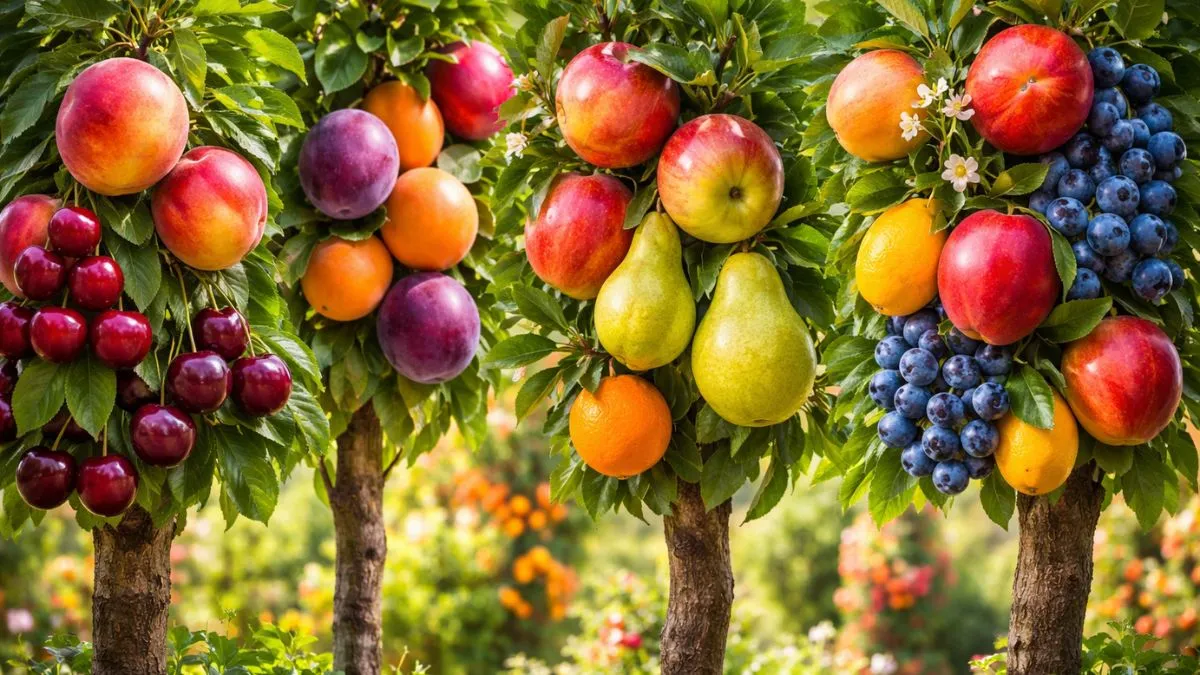
Hybrid fruit trees are specially developed to deliver improved taste, stronger disease resistance, and easier maintenance for gardeners.
By combining the best characteristics of two different fruit varieties, breeders create trees that not only produce unique flavours but also grow more reliably in many environments.
Hybridisation occurs when two different fruit tree species are cross-pollinated. The resulting variety inherits traits from both parent plants, which often leads to better texture, richer flavour, and improved productivity. A classic example is the pluot, which is a cross between a plum and an apricot, known for its smooth skin and intensely sweet flesh.
For home gardeners, hybrid fruit trees are an excellent choice because they are often more adaptable and resilient than traditional fruit trees. Many varieties are bred to resist common diseases and tolerate a wider range of growing conditions.
However, each hybrid cultivar has its own chilling requirements and hardiness range. Checking your USDA plant hardiness zone or consulting a local nursery can help determine which tree will perform best in your garden.
Below are five remarkable hybrid fruit trees recommended by fruit-growing experts that can produce delicious and distinctive harvests.
01. Tri-Lite Peach Plum
Most of the Hybrid Fruit Trees, the Tri-Lite peach plum is an unusual hybrid created by crossing a peach with a Japanese plum. This rare fruit closely resembles a white peach in appearance but offers a more complex flavour profile.
The fruit typically features orange-yellow skin and soft white flesh with striking red pigmentation near the peel. Its flavour combines the sweetness of a white peach with a subtle plum finish, creating a refreshing and memorable taste.
This variety is considered an early-season producer. While the tree is self-fertile and capable of producing fruit on its own, planting it near another peach tree can increase yields. It also performs well in regions with relatively low winter chill requirements.
Zones: 5–9
Size: 10–15 feet tall × 10 feet wide
Care Requirements: Full sun exposure and well-drained soil enriched with organic matter.
02. Sugar Twist Pluerry
The Sugar Twist plum is a fascinating hybrid created from plum and cherry genetics. Its flavour blends the sweetness of ripe cherries with the mellow richness of plums.
This fruit usually matures early in the season, often becoming ready to harvest around early June. The fruit resembles either a small plum or a slightly oversized cherry. It typically has red skin and bright yellow flesh with a very high sugar content.
Unlike some fruit trees, this hybrid requires cross-pollination to produce fruit. That means another compatible tree—such as a second plum—must be planted nearby. With proper pollination, the tree produces flavorful fruit consistently.
Zones: 6–9
Size: 12–20 feet tall × 10–15 feet wide
Care Requirements: Full sunlight and nutrient-rich, well-draining soil.
03. Dapple Dandy Pluot
The Dapple Dandy pluot is one of the most visually striking hybrid fruits available. Developed from a combination of plum and apricot, it is widely appreciated for both its beauty and exceptional flavour.
The fruit is easily recognisable thanks to its speckled red-and-yellow skin and vivid red interior. Its sweet, complex flavour often makes it a favourite at farmers’ markets and fruit tastings.
During spring, the tree produces fragrant blossoms with pink and white petals and bright yellow stamens, adding ornamental value to the garden. The fruit usually ripens from late July through early August.
For the best harvest, growers typically plant another pluot tree nearby to ensure effective pollination.
Zones: 5–10
Size: 12–18 feet tall × 12–18 feet wide
Care Requirements: Full to partial sunlight and well-draining soil rich in organic material.
04. SpiceZee Nectaplum
The SpiceZee nectar plum is a groundbreaking hybrid that combines traits from nectarine, peach, and plum. This unique tree produces fruit that looks similar to a white-fleshed nectarine but offers a complex flavour blending nectarine sweetness with subtle plum notes.
In spring, the tree becomes especially attractive thanks to its vibrant pink blossoms and deep red foliage. Because of its decorative appearance, many gardeners grow it not only for its fruit but also as an ornamental landscape tree.
Another advantage is its low chill requirement, needing only about 200 chill hours. Despite this, it can also adapt to climates that experience colder winters.
Zones: 6–9
Size: 10–15 feet tall × 10–15 feet wide
Care Requirements: Full sun and soil that drains well while containing plenty of organic matter.
05. Flavour King Pluot
The Flavour King pluot is often considered one of the most delicious hybrid fruits available. Although it is a cross between plum and apricot, the fruit resembles a plum more closely in appearance.
Its skin ranges from deep red to purple, while the flesh may appear bright yellow or deep red depending on sunlight exposure during growth. The fruit is known for its intense sweetness and candy-like flavour.
This productive tree can yield more than 50 pounds of fruit in a single season under the right conditions. However, proper pollination is important. Planting it near another Japanese plum, apricot, or compatible hybrid ensures a successful harvest.
Zones: 5–9
Size: 12–20 feet tall × 12–20 feet wide
Care Requirements: Full sunlight and fertile, well-drained soil.
Hybrid fruit trees offer gardeners an exciting opportunity to grow unique and flavorful fruits while benefiting from improved disease resistance and adaptability.
By combining the characteristics of different fruit species, these trees produce harvests that are often sweeter, more visually appealing, and easier to cultivate than traditional varieties.
Whether you choose the early-ripening Tri-Lite peach plum, the cherry-like sweetness of Sugar Twist plum, or the candy-flavoured Flavour King plum, hybrid trees can transform an ordinary garden into a diverse and productive orchard.
With the right sunlight, soil, and pollination partners, these innovative fruit trees can reward gardeners with abundant and unforgettable harvests year after year.
FAQs
What is a hybrid fruit tree?
A hybrid fruit tree is created by cross-pollinating two different fruit varieties to produce fruit with improved flavour and traits.
Are hybrid fruit trees easy to grow?
Yes, most hybrid fruit trees are bred to be hardy, disease-resistant, and adaptable to different climates.
Do hybrid fruit trees need pollination?
Some are self-fertile, while others need another compatible tree nearby for proper pollination.