
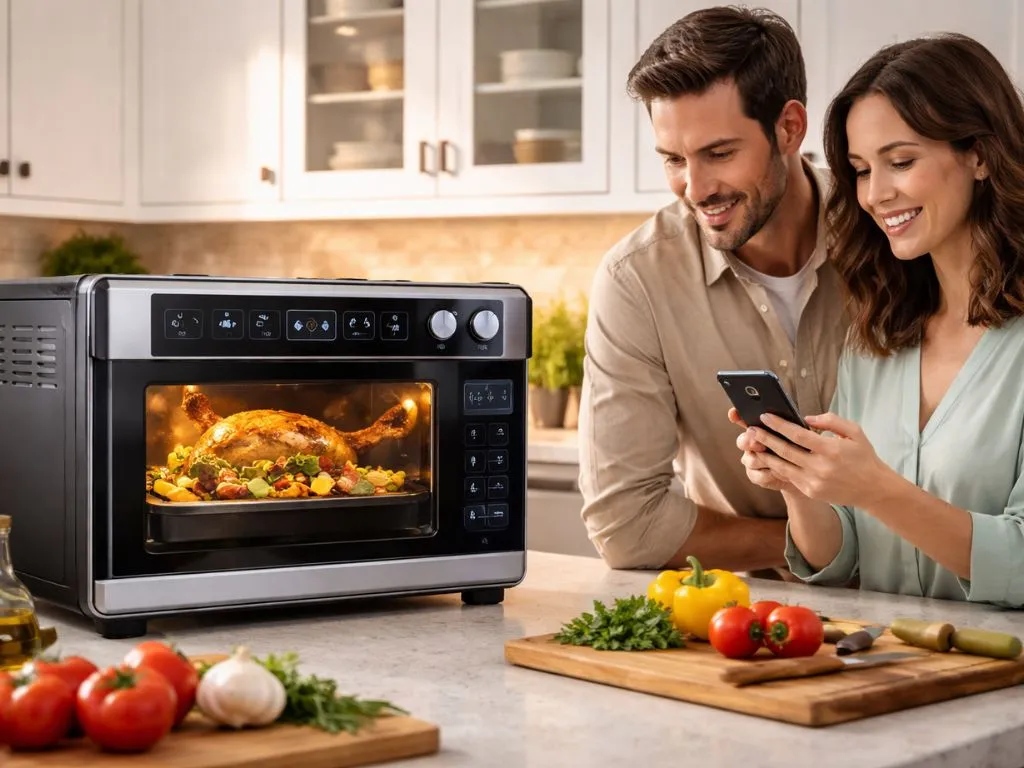
For decades, the familiar buzz of a microwave has been part of everyday kitchen life, quickly reheating leftovers or preparing instant meals. But that long-standing routine may soon change.
A new countertop cooking device is emerging as a serious alternative — and experts believe it could eventually push microwaves into retirement.
Often referred to as a “microwave killer,” this compact, technology-driven appliance promises superior speed, improved energy efficiency, and far more cooking flexibility.
Unlike traditional microwaves that rely on electromagnetic waves, this next-generation device uses an advanced heating system that many experts consider the future of home cooking.
As the microwave approaches its 75th year in kitchens worldwide, this innovation raises an important question: Are we witnessing the start of a new era in everyday meal preparation?
Why the Microwave Is Losing Ground
At first glance, the new countertop appliance looks familiar. But internally, it works in a completely different way. Instead of microwave radiation, it combines high-performance convection airflow with infrared heat, creating a more balanced and controlled cooking environment.
Food science professionals highlight a major flaw in traditional microwaves: uneven heating. Hot edges, cold centers, and dried-out textures are common results.
“This new technology distributes heat evenly across the entire dish,” explains culinary instructor Emily Walters. “The result is faster cooking with far more consistent outcomes.”
Independent performance tests suggest the device can reheat meals up to 50% faster than standard microwaves while consuming significantly less electricity — making it both time-saving and energy-conscious.
Redefining Everyday Cooking at Home
This appliance isn’t limited to reheating leftovers. Its precision temperature control allows users to perform tasks usually reserved for ovens or stovetops.
Food creators say it opens the door to a wider range of cooking methods:
- Searing meats
- Roasting vegetables
- Baking small portions
- Crisping food without oil
Because it can handle multiple cooking techniques, many believe it could replace several appliances at once — including toaster ovens and air fryers. For busy households, that means faster meals with less clutter and fewer devices competing for counter space.
Adjusting to a New Way of Cooking
Despite its advantages, switching away from microwaves won’t be instant. Years of habit have made microwave use second nature for many people.
“Microwaves are deeply ingrained in daily routines,” Walters admits. “But once users experience the speed and quality of this new system, most adapt quickly.”
To simplify the transition, manufacturers are designing user-friendly controls and presets that mirror familiar microwave functions. Online tutorials, step-by-step recipes, and beginner guides are also helping new users get comfortable faster.
A More Sustainable Direction for Kitchens
Beyond convenience, sustainability is a major reason this appliance is gaining attention. Traditional microwaves are known for energy loss and inconsistent heat distribution.
Environmental experts say this new device was engineered with efficiency as a core principle.
“By reducing wasted energy and improving cooking accuracy, it lowers both power usage and food waste,” says environmental policy specialist Dr. Samantha Greenfield.
More evenly cooked food means fewer ruined meals — and fewer ingredients thrown away. For eco-minded consumers, this combination of lower energy bills and reduced waste is a strong incentive.
Is This the Beginning of the End for Microwaves?
While microwaves won’t vanish overnight, industry analysts believe their dominance may gradually decline. Consumers are increasingly drawn to appliances that offer multiple functions in one compact unit.
“This device delivers speed, efficiency, and versatility in a way microwaves simply can’t,” notes retail analyst Jared Wilson. “That makes it a serious contender in modern kitchens.”
As adoption grows and prices become more competitive, the countertop “microwave killer” could become the preferred choice for future households.
Microwave vs Countertop “Microwave Killer”
| Feature | Traditional Microwave | Countertop “Microwave Killer” |
|---|---|---|
| Heating Method | Electromagnetic radiation | Convection + infrared heat |
| Heat Distribution | Uneven, hot and cold spots | Consistent and uniform |
| Energy Usage | Relatively high | Significantly lower |
| Functionality | Reheating and basic cooking | Sear, roast, bake, reheat |
| Cooking Quality | Variable results | Reliable and precise |
Pros and Cons of the Countertop “Microwave Killer”
Advantages
- Up to 50% faster cooking times
- Lower electricity consumption
- Can replace multiple kitchen appliances
- More even heating reduces food waste
- Greater cooking flexibility
Drawbacks
- Higher upfront cost
- Requires more counter space
- Learning curve for first-time users
- Limited availability in some markets
A New Era of Faster, Smarter, and Greener Home Cooking
The rise of the countertop “microwave killer” signals a meaningful shift in how we cook at home. By combining speed, precision, and sustainability, this innovative appliance challenges decades of reliance on microwaves.
While the transition may take time, its ability to simplify cooking, reduce energy consumption, and deliver better results positions it as a strong contender for the future of kitchens worldwide
FAQs
What is the main difference between the countertop “microwave killer” and a microwave?
The key distinction lies in heating technology. Microwaves use electromagnetic radiation, while the new device relies on convection airflow and infrared heat for more even, efficient cooking.
How much faster is it than a microwave?
Testing shows it can reheat food up to 50% faster due to improved heat distribution and precise temperature control.
Can it replace other kitchen appliances?
Yes. It can handle reheating, roasting, baking, and searing — potentially replacing toaster ovens and air fryers.