
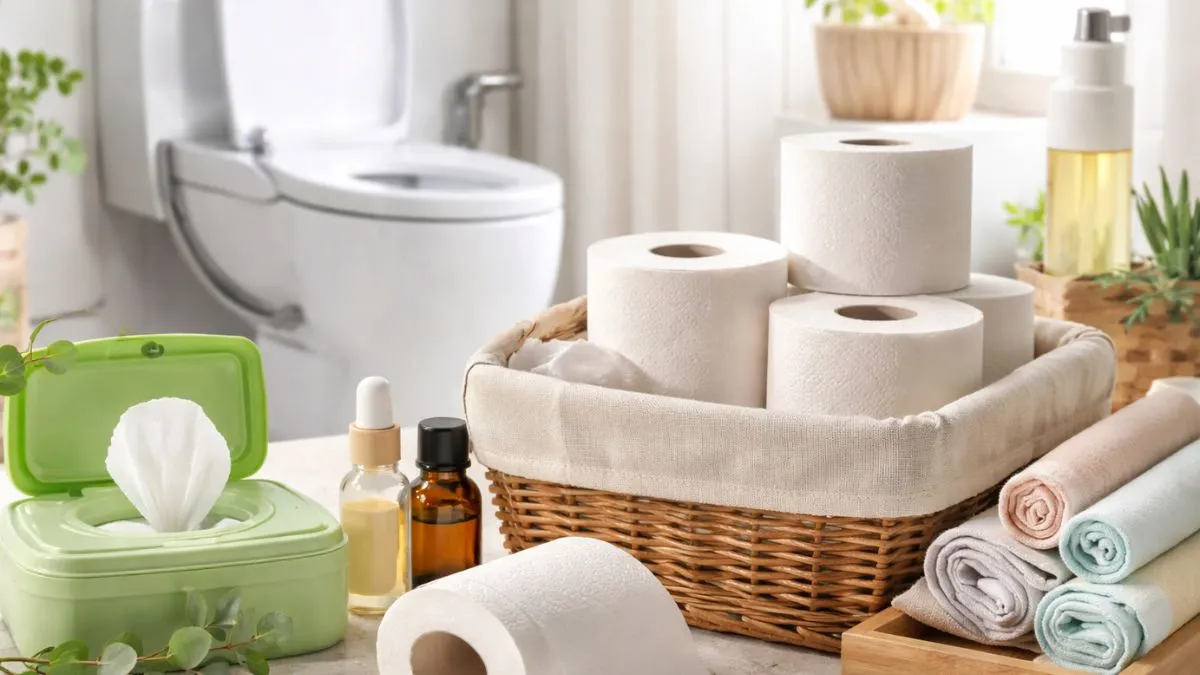
Toilet paper has long been considered an essential part of daily hygiene. However, recent research and changing global habits are challenging that assumption.
A growing number of households are exploring water-based cleaning methods and other alternatives that are not only more hygienic but also cheaper and more environmentally sustainable.
At the same time, studies questioning the environmental benefits of bamboo toilet paper have sparked new conversations about what the truly eco-friendly option might be.
What the Latest Bamboo Toilet Paper Study Revealed?
A recent life-cycle assessment conducted by researchers at North Carolina State University examined the environmental impact of different types of bathroom tissue.
The study compared conventional toilet paper produced in the United States with bamboo-based toilet paper manufactured in China and shipped overseas.
The findings were surprising. According to the research, producing one ton of typical U.S. wood-pulp toilet paper generates approximately 1,824 kilograms of carbon dioxide equivalent throughout its life cycle.
By comparison, bamboo toilet paper manufactured in China and transported to the U.S. produces around 2,400 kilograms of emissions for the same amount of product.
Beyond carbon emissions, bamboo tissue also showed weaker results in several environmental indicators, including smog formation and respiratory health impacts.
Is Bamboo the Real Problem?
Despite these results, scientists emphasize that bamboo itself is not inherently worse for the environment than wood pulp. The primary issue lies in how and where bamboo toilet paper is currently produced.
Many bamboo tissue factories involved in the study relied heavily on coal-powered electricity along with fossil fuels used for steam generation and drying processes. In contrast, pulp suppliers in countries such as Canada and Brazil often rely more on renewable energy sources and biomass.
When researchers simulated bamboo tissue production using cleaner energy sources, its carbon footprint decreased significantly and became comparable to traditional wood-based toilet paper.
Why Simply Switching Toilet Paper Isn’t Enough?
Global demand for toilet paper continues to grow rapidly. Every day, tens of thousands of trees are used worldwide to produce hygiene tissue products. In the United States alone, toilet paper consumption per person is significantly higher than the global average.
The U.S. hygiene tissue industry is projected to approach $50 billion annually, meaning even small changes in consumer habits could have significant environmental consequences.
For a truly sustainable solution, the focus must shift from what type of paper we use to how much paper we actually consume.
Water-Based Hygiene: A Common Practice in Many Countries
While toilet paper dominates in North America, many countries already rely on water-based hygiene methods. In regions across Asia, the Middle East, and parts of southern Europe, cleaning with water is considered the standard approach.
Traditional porcelain bidets, integrated wash toilets, handheld sprayers, and modern bidet attachments are widely used in these areas. These systems connect to a household water supply and deliver a gentle stream of clean water for personal hygiene.
After rinsing, users typically dry with a reusable cloth towel or a small amount of toilet paper. This method can dramatically reduce overall tissue consumption.
The Problem with Wet Wipes and “Flushable” Products
Many consumers turn to wet wipes when they want a more refreshing cleaning experience. However, wastewater experts warn that these products can cause serious plumbing and environmental problems.
Studies in Europe and North America show that nonwoven wipes frequently clog sewer pumps and contribute to expensive blockages in municipal wastewater systems. Even wipes labelled “flushable” often take much longer to break down than standard toilet paper.
Additionally, some wipes contain synthetic fibres that do not fully degrade and may contribute to microplastic pollution.
For households trying to reduce their environmental impact, replacing toilet paper with wet wipes is rarely a better solution.
Practical Ways to Create a More Sustainable Bathroom
Improving bathroom sustainability does not require drastic changes. Small adjustments can significantly reduce environmental impact over time.
One of the simplest steps is to reduce overall tissue use. Avoid extremely thick or ultra-soft premium toilet paper, which requires more energy during manufacturing.
When possible, choose products made from recycled fibres or sourced from responsibly managed forests. Locally produced tissue can also reduce transportation emissions.
The Future of Bathroom Hygiene May Use Less Paper
The growing discussion around toilet paper alternatives highlights an important reality: sustainability often depends more on behavioural change than on simply switching products.
While bamboo toilet paper was once promoted as an environmentally friendly alternative, research shows that production methods and energy sources greatly influence its real climate impact. In many cases, reducing paper consumption altogether may offer a far more effective solution.
Water-based hygiene systems such as bidets, sprayers, and portable travel devices provide a cleaner and more resource-efficient approach that millions of people already use around the world.
FAQs
Are bidets more hygienic than toilet paper?
Yes. Bidets clean with water, which removes residue more effectively than dry toilet paper.
Is bamboo toilet paper eco-friendly?
Not always. Its environmental impact depends on how it is produced and the energy used in manufacturing.
Do bidets reduce toilet paper use?
Yes. Using a bidet can significantly cut down the amount of toilet paper needed.