
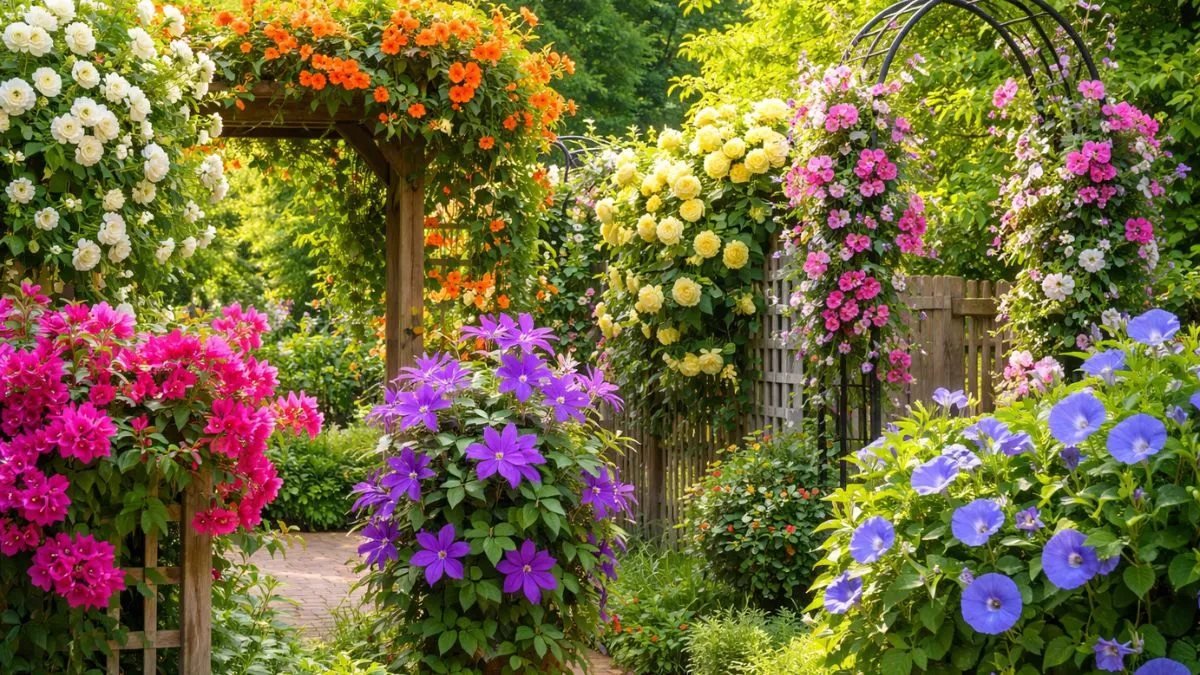
Climbing plants are one of the simplest ways to add beauty and vertical interest to a garden. Whether they trail across a pergola, weave through a trellis, or climb along a fence, these vines bring a charming cottage-garden feel to outdoor spaces.
Many gardeners assume that climbing plants require constant trimming and attention. However, several varieties grow vigorously with very little care.
From fragrant jasmine to colorful bougainvillea, here are nine low-maintenance climbing plants that grow quickly and require minimal upkeep.
1. Clematis
Botanical Name: Clematis spp.
Sun Exposure: Full sun to partial shade
Soil Type: Moist, well-drained soil
Soil pH: Neutral to slightly alkaline (6.5–7.5)
Clematis is a popular flowering vine known for its delicate blooms and graceful climbing habit. This perennial plant thrives even in gardens that receive partial shade during the afternoon.
Once established, clematis needs little care beyond occasional watering and light pruning.
2. Climbing Rose
Botanical Name: Rosa setigera
Sun Exposure: Full sun
Soil Type: Loamy, well-drained soil
Soil pH: Slightly acidic (6.0–6.5)
Climbing roses are among the most iconic vines used in traditional gardens. Their layered blooms and romantic appearance make them ideal for covering arches, fences, and pergolas.
Although they do not naturally wrap around structures like some vines, they only need light support to guide their growth.
Many varieties are also fragrant and suitable for cutting, making it a favourite among gardeners who enjoy fresh floral arrangements.
3. Cup and Saucer Vine
Botanical Name: Cobaea scandens
Sun Exposure: Full sun
Soil Type: Moist, well-drained soil
Soil pH: 6.0–7.5
The cup and saucer vine gets its name from its unique bell-shaped flowers that resemble a teacup resting on a saucer. This fast-growing vine produces striking purple blooms that stand out in any garden.
Its rapid growth and unusual flowers make it an eye-catching addition to trellises and pergolas.
4. Honeysuckle
Botanical Name: Lonicera periclymenum
Sun Exposure: Partial sun or dappled shade
Soil Type: Moist, rich, well-drained soil
Soil pH: 5.5–8.0
Honeysuckle is famous for its sweet fragrance that fills the garden air during the blooming season. The delicate tubular flowers not only look beautiful but also attract beneficial pollinators.
Bees, butterflies, and hummingbirds are particularly drawn to honeysuckle’s nectar-rich blossoms. The plant can easily be trained to grow along fences or trellises, adding both scent and movement to the garden.
5. Star Jasmine
Botanical Name: Trachelospermum jasminoides
Sun Exposure: Full sun to partial shade
Soil Type: Moist, loamy, well-drained soil
Soil pH: 6.0–7.0
Star jasmine is admired for its delicate white flowers and powerful fragrance. During spring, the vine becomes covered in clusters of star-shaped blossoms that contrast beautifully with its deep green foliage.
Besides its ornamental appeal, star jasmine also attracts pollinators and contributes to a lively garden environment.
6. Climbing Hydrangea
Botanical Name: Hydrangea anomala
Sun Exposure: Partial shade to full shade
Soil Type: Rich, moist, well-drained soil
Soil pH: 5.5–7.0
Climbing hydrangea is ideal for gardeners looking to cover shaded walls or fences. Unlike many flowering vines that require full sunlight, this plant thrives even in areas with limited light.
7. Virginia Creeper
Botanical Name: Parthenocissus quinquefolia
Sun Exposure: Full sun to partial shade
Soil Type: Clay, sandy, or loamy soil
Soil pH: 5.0–8.0
Virginia creeper is one of the easiest climbing plants to grow. It adapts to a wide range of climates and soil conditions, making it a reliable choice for beginner gardeners.
This vigorous vine quickly climbs walls, fences, and trellises. In autumn, its leaves turn a brilliant red, providing a dramatic seasonal display.
8. Plumbago
Botanical Name: Plumbago auriculata
Sun Exposure: Full sun to partial shade
Soil Type: Rich, well-drained soil
Soil pH: 6.0–7.5
Plumbago is a tropical plant that produces clusters of soft blue, pink, or white flowers throughout the summer months.
In warmer climates, particularly USDA Zones 8–11, plumbago can grow as a perennial evergreen vine. In cooler regions, it is often planted as an annual, but it grows quickly and still provides plenty of seasonal color.
Its delicate flowers and trailing growth habit make it perfect for fences, trellises, or cascading over garden walls.
9. Bougainvillea
Botanical Name: Bougainvillaea spp.
Sun Exposure: Full sun
Soil Type: Well-drained sandy or loamy soil
Soil pH: 5.5–6.5
Bougainvillaea is known for its vibrant magenta, pink, purple, or orange bracts that brighten gardens in warm climates. These tropical vines thrive in hot, sunny conditions and tolerate dry soil surprisingly well.
Their bold colours and resilience make them a popular choice for tropical-style gardens.
Effortless Climbers for a Beautiful Vertical Garden
Climbing plants are an excellent way to maximize space while adding colour, fragrance, and texture to a garden. Many of these vines grow quickly and require very little maintenance once established.
By choosing the right climbing plants for your climate and garden conditions, you can enjoy a stunning garden display without spending hours on upkeep.
FAQs
What is the easiest climbing plant to grow?
Virginia creeper and clematis are among the easiest climbing plants because they adapt well to different conditions and require minimal care.
Which climbing plants grow best in shade?
Climbing hydrangea and certain varieties of clematis perform well in partial shade or low-light garden areas.
Are climbing plants good for small gardens?
Yes, climbing plants are ideal for small gardens because they grow vertically and help maximize limited space.