
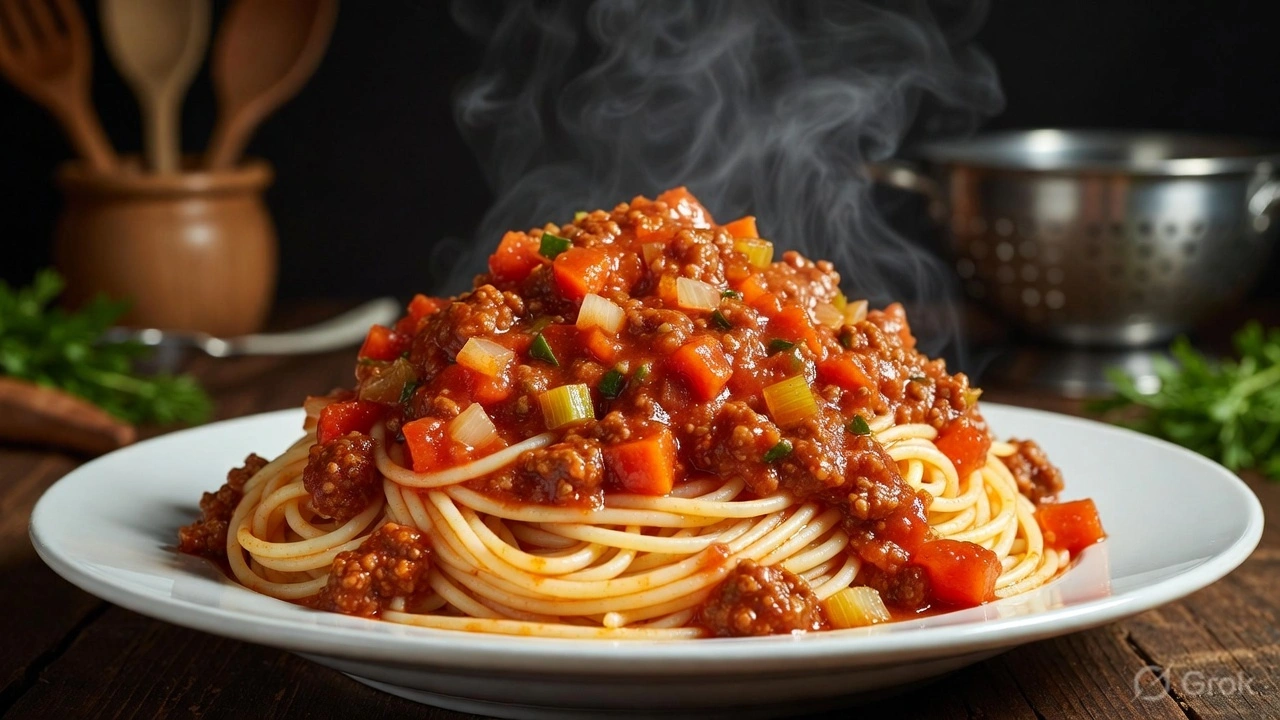
Spaghetti bolognese is a classic comfort food loved around the world, yet everyone has their own way of making it. Should you add celery? Skip the peppers? Focus on meat or tomato?
Galician chef Pablo Suárez, famous for his social media channel “Poesía de fogón”, recently went viral for revealing his secret: four traditional vegetables that are non-negotiable for a proper bolognese.
The Four Vegetables You Must Include
In a popular TikTok video, Suárez explains that a real bolognese starts with a carefully cooked sofrito – a mix of vegetables slowly softened to build the sauce’s flavour. According to him, the four essential vegetables are:
- Onion – adds sweetness and aroma
- Carrot – brings natural sugar and a subtle earthy flavour
- Celery – gives freshness and a slight savoury backbone
- Garlic – rounds out the sauce with a Mediterranean punch
Tip: Chop the vegetables finely. Small pieces melt into the sauce and create depth without one flavour overpowering the others.
Vegetable Contributions at a Glance
| Vegetable | Main Contribution |
|---|---|
| Onion | Sweetness, aroma, and body as it softens |
| Carrot | Balances acidity from tomato and wine with natural sweetness |
| Celery | Adds freshness and prevents the sauce from feeling heavy |
| Garlic | Provides distinct Mediterranean flavour and ties the sauce together |
Suárez recommends sweating this mix over low heat for 10–15 minutes. The goal is for the vegetables to soften slowly, caramelise slightly at the edges, and taste delicious even before adding meat.
From Sofrito to Sauce: Building Flavour
Once the vegetables are ready, Suárez adds minced meat, spreading it out to brown rather than steam. Early seasoning with salt and black pepper enhances the taste. Browning the meat is key – it gives the sauce its rich, savory depth.
Next comes white wine, poured over the meat to lift caramelised bits from the pan and add a subtle acidity. The alcohol evaporates quickly, leaving flavour behind. Only then does he add crushed tomato and a splash of water, letting it simmer gently for 20–30 minutes to make a thick sauce that clings to pasta.
Pasta and Cheese: The Final Touch
Boil your spaghetti in well-salted water until almost al dente. Then mix it directly into the sauce for a minute or two, letting the flavours combine. Finish with grated cheese, like Parmesan or Grana Padano, either stirred in off the heat or sprinkled on top at the table.
Good bolognese isn’t about fancy ingredients; it’s about patience with the vegetables and careful simmering.
Why These Vegetables Are Important
Suárez’s four vegetables are rooted in the classic Italian soffritto (or battuto), a base for many traditional sauces and stews. They perform specific roles:
- Reduce the need for sugar or stock cubes
- Stretch the meat without compromising flavour
- Make the sauce aromatic and balanced
Historically, bolognese originated from a meat stew in ancient Gaul, evolving through medieval Europe and Italy. Tomatoes were added in the 16th century, and the dish eventually took on the form we know today. Suárez’s method honours this tradition while keeping it simple for home cooks.
Adapting Suárez’s Method at Home
For a weeknight version, follow these steps:
- Finely chop onion, carrot, celery, and garlic
- Cook slowly in olive oil with salt for 10–15 minutes
- Add minced beef, season, and brown the meat
- Pour in white wine, letting it evaporate
- Add crushed tomato and a little water, simmer 20–30 minutes
- Boil spaghetti, mix into the sauce, and top with grated cheese
For those avoiding alcohol, replace wine with stock or water and a splash of lemon juice. Adjust celery or garlic to taste.
Following Pablo Suárez’s advice of using onion, carrot, celery, and garlic as the foundation transforms your spaghetti bolognese. The vegetables build a flavourful, balanced base that complements the meat, reduces the need for extra seasoning, and makes the sauce rich, aromatic, and comforting.
Whether cooking for family or trying to impress friends, this approach shows that patience and the right vegetables make all the difference.
FAQs
Can I skip one of the four vegetables?
You can, but it may slightly alter the traditional flavour. Onion and carrot are most crucial.
Can I use spaghetti instead of tagliatelle?
Yes, spaghetti works well at home, even though tagliatelle is traditional.
How long should I simmer the sauce?
Simmer gently for 20–30 minutes until thick and clingy to coat the pasta.