
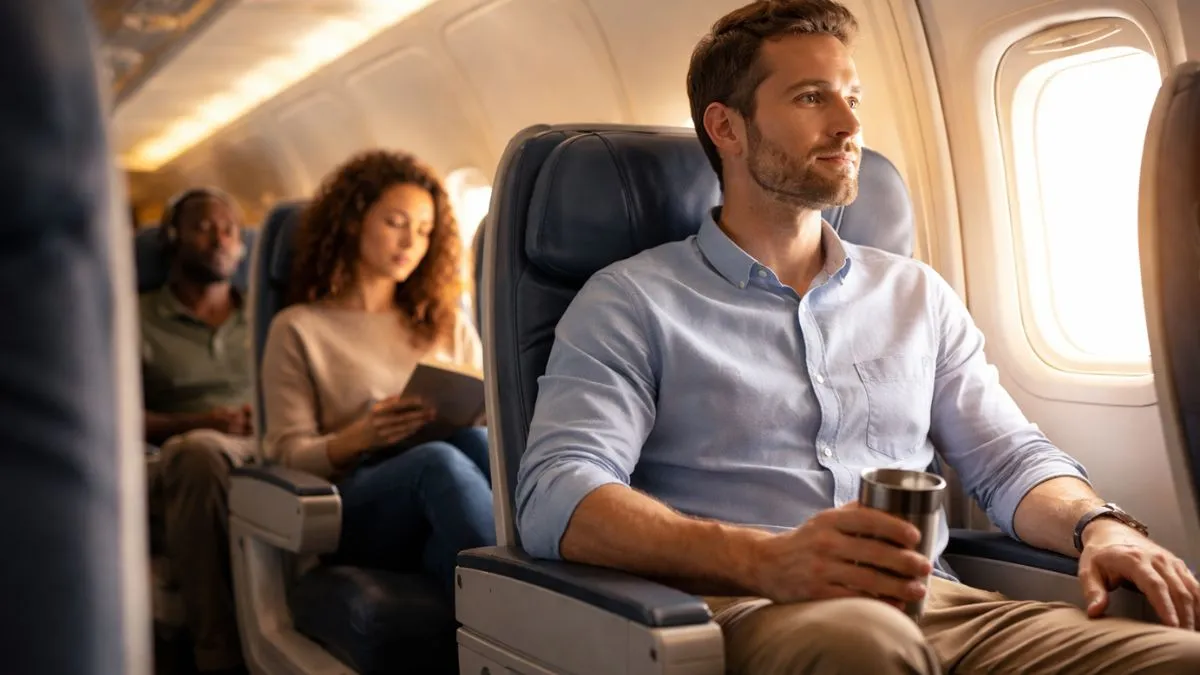
Aisle Seats: Aeroplane seating choices might seem trivial, but psychology suggests they can reveal deeper patterns about how people think, feel, and regulate their sense of safety.
For years, I have deliberately avoided sitting in the window seat on aeroplanes. Even when offered an upgrade, I decline. If someone asks why, I give the standard explanation: easier bathroom access. It’s a convenient answer and usually ends the conversation.
But the truth goes far deeper than that.
The real reason relates to something psychologists call “autonomous exit”—the internal reassurance that you can leave a situation whenever you need to, without asking anyone for permission or disrupting others.
For some people, that small sense of control can make a huge psychological difference.
What Your Aisle Seats Preference Might Reveal About Your Personality?
Behavioural psychology suggests that the seat we prefer on an aeroplane may reflect aspects of our personality and emotional habits.
People who prefer aisle seats often value freedom of movement and control over their environment. The ability to stand up, stretch, or move without disturbing others offers a sense of independence.
Window-seat travellers, on the other hand, are often described as individuals who enjoy quiet observation and reflection. They may find comfort in a more contained environment where they can relax and look outside.
Then there are middle-seat passengers—who either booked late or genuinely don’t mind limited space. Both explanations remain somewhat mysterious.
However, for many aisle seats travellers, the preference goes beyond comfort or convenience. For individuals raised in unpredictable or emotionally intense environments, having a clear physical exit can help regulate stress and anxiety.
When the body knows it can leave if necessary, it often relaxes more easily.
How Childhood Experiences Shape the Need for an Easy Exit?
Many psychological behaviours that appear minor in adulthood can trace their roots back to early experiences.
Growing up in a household where emotions changed rapidly can create a strong awareness of physical positioning. Children raised in these environments often become hyper-aware of where doors, exits, and escape routes are located.
Without realising it, they begin developing strategies for leaving situations quickly if tensions rise.
For example, sitting near doors, keeping shoes on at social events, or parking a car facing outward are subtle habits that can emerge from this type of upbringing.
These behaviours reflect a nervous system that learned early in life that having the option to leave equals safety.
Even among siblings raised in the same environment, this pattern can manifest differently. One person may create distance by moving far away geographically, while another may remain close but maintain emotional distance.
Either way, both strategies revolve around maintaining autonomy.
The Role of Autonomy in Human Psychology
The concept of autonomy plays a crucial role in self-determination theory, a widely recognised framework in motivational psychology.
According to this theory, humans have three basic psychological needs:
- Autonomy
- Competence
- Relatedness
When autonomy is supported, individuals tend to experience better mental health, motivation, and overall well-being. When it is restricted, people may feel trapped, stressed, or resistant.
The aisle seats can therefore become a physical symbol of autonomy. It provides reassurance that personal freedom remains intact.
Interestingly, knowing we can leave often makes us more willing to stay. When people feel trapped, even small discomforts feel amplified.
The Hidden Downsides of Excessive Independence
While autonomy is important, it can sometimes lead to unintended consequences if taken too far.
Research suggests that an excessive drive for independence can create distance in relationships and limit emotional closeness. The same instinct that protects personal freedom may also prevent a deeper connection.
For some individuals, this can manifest as:
- Keeping a very small social circle
- Leaving events early without saying goodbye
- Maintaining physical or emotional distance in relationships
This behaviour can blur the line between healthy independence and emotional isolation.
Why People Often Hide the Real Reason for Their Preferences?
Most people don’t openly explain the deeper reasons behind their need for aisle seats.
Instead, they rely on socially acceptable explanations like needing frequent bathroom breaks or wanting extra legroom.
These explanations function as cover stories, allowing people to avoid discussing vulnerable emotional experiences.
However, these cover stories can reinforce a pattern learned earlier in life, where genuine emotions were minimised or translated into something easier to explain.
In families where emotional expression was discouraged, fear might be labelled as tiredness, anger might be dismissed as stress, and the need for psychological safety might be described as simple convenience.
How the Body Remembers What the Mind Tries to Rationalise?
Even when the mind rationalises a behaviour, the body often retains the original memory behind it.
The physical reactions associated with feeling trapped can appear in subtle ways:
- Faster headaches in confined spaces
- Changes in breathing when movement is restricted
- Heightened awareness of exits and escape routes
These reactions reflect how the nervous system responds to perceived limitations in mobility.
Meditation and therapy can help individuals become aware of these responses. While they may not eliminate them, they can provide tools for observing them without being overwhelmed.
Autonomous Exit in Everyday Life
Once you understand the concept of autonomous exit, it becomes easier to recognise similar behaviours in daily situations.
Examples include:
- A friend who always drives their own car to gatherings
- Someone who chooses a seat facing the door in restaurants
- A coworker who sits near the back of the meeting rooms
- Guests who keep their coats on during social events
Each of these habits preserves the option to leave quickly without drawing attention.
These behaviours are subtle ways people maintain a sense of control over their environment.
Learning to Feel Safe Without the Exit Strategy
For people who rely heavily on autonomous exit strategies, the real personal growth lies not in eliminating them but in gradually learning to stay present even when leaving isn’t immediately possible.
This doesn’t mean forcing oneself into uncomfortable situations.
Instead, it involves building internal confidence that safety can come from within rather than solely from external escape routes.
Over time, behaviours that once functioned as survival mechanisms may evolve into simple preferences.
That shift—from necessity to choice—represents meaningful progress.
Why the Aisle Seats Is Really About Psychological Safety?
Choosing aisle seats on an aeroplane might seem like a simple travel preference, but psychology suggests it can reflect deeper emotional patterns.
For many individuals, the aisle represents more than convenience. It symbolises the reassurance that personal autonomy remains intact.
The concept of autonomous exit highlights how our nervous system remembers past experiences and shapes the small decisions we make every day.
While maintaining the ability to leave can provide comfort, the long-term goal for many people is learning to feel safe enough to stay fully present in the moment.
Ultimately, true psychological security doesn’t come from always being near the exit—it comes from knowing that safety can exist within ourselves.
FAQs
What is autonomous exit in psychology?
Autonomous exit refers to the psychological need to know that you can leave a situation freely without needing permission or disrupting others.
Is needing personal autonomy unhealthy?
Not necessarily. Autonomy is a basic psychological need, but excessive independence may sometimes create emotional distance in relationships.
How can someone reduce anxiety related to feeling trapped?
Practices like therapy, mindfulness, and meditation can help individuals understand their responses and gradually develop a stronger internal sense of safety.